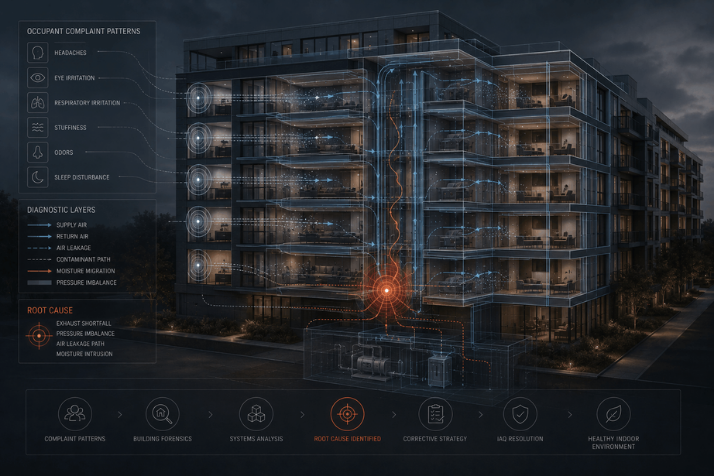
A vendor-proposed $1.25 million remediation and HVAC replacement scope was reduced to $315,000 after independent forensic diagnosis identified a mechanical pressure imbalance — not equipment failure — as the root cause of systemic humidity and mold across 40% of units.
.png)
Whether you're evaluating a vendor proposal, investigating recurring building issues, planning a capital project, or assessing a new acquisition, we'll help determine the right next step.
A multifamily property was experiencing chronic humidity issues, recurring musty odors, and escalating tenant complaints across a significant portion of its units. Local HVAC and remediation vendors had assessed the property and developed proposals. The ownership group engaged Building Science Advisors for an independent forensic assessment before approving any capital expenditure.
Visible mold in multiple units. Persistent above-threshold relative humidity readings. Tenant complaints that had survived two prior remediation cycles without resolution. The symptoms were real — but the cause had not been identified by any of the vendors who had previously assessed the property.
The vendor-proposed scope represented a substantial capital commitment — full HVAC replacement combined with strip-to-stud remediation across the affected units. Beyond the direct expenditure, the timeline carried significant tenant displacement risk, hotel voucher liability, and an active tenant legal complaint that would be strengthened, not resolved, by a high-profile remediation event that did not fix the underlying cause.
Building Science Advisors conducted a forensic field assessment including blower door and pressure testing across the affected zones, duct imaging, HVAC system performance measurement, and moisture forensic investigation. The diagnostic work mapped the air pressure conditions of the building — a step no prior vendor had taken.
The field data revealed a severe negative pressure condition in the affected corridors and units. The building was actively drawing humid outside air through the building envelope and into the occupied spaces — not because of equipment failure, but because of a mechanical air balance deficiency. The ductwork itself was found to be largely intact. The vendor’s proposed equipment replacement and full demolition would have addressed none of this. The mold would have returned within one to two seasons of any remediation performed under those conditions.
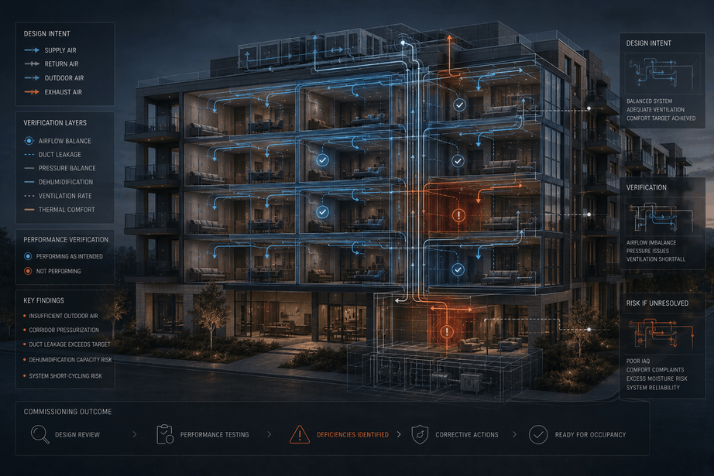
Building Science Advisors voided the vendor’s proposed scope and issued a targeted Corrective Action Plan addressing the actual root cause: correcting the building’s pressure dynamics, sealing the duct plenums where leakage was confirmed, re-balancing the make-up air system to create appropriate positive pressure, and installing targeted dehumidification only in units with confirmed ongoing moisture exposure. The corrective scope was a fraction of the originally proposed expenditure.
The corrective scope was designed with a commissioning protocol. Upon completion, Building Science Advisors returned to verify that the pressure conditions had been corrected, that humidity readings had normalised, and that the conditions driving the mold growth had been eliminated. The engagement was not considered complete until the outcome was confirmed.
The financial difference between an independent forensic diagnosis and a vendor-proposed scope can be substantial on a single asset. The more consequential protection is this: the corrective work addressed the actual cause. The vendor’s proposed scope would not have. The problem would have returned. This engagement is the clearest illustration of why the diagnostician and the vendor should never be the same party.
Note: Financial figures associated with this engagement are drawn from project documentation and are subject to final verification before publication.
Contact Building Science Advisors to discuss a forensic diagnostic or scope review engagement for your asset.